
Industry Portal
Related News
- 00
0000-00
Closed Loop Partners Backs Mono-Material PP Textiles to Replace PVC and PU Coatings - 00
0000-00
Buying Solution-Dyed Outdoor Fabric in Europe: Specs, MOQs and Lead Times - 00
0000-00
Outdoor Brands Prepare for California Textile EPR Eco-Modulated Fees - 00
0000-00
How to Choose a Fabric Performance Lab for Outdoor Textile Testing - 00
0000-00
EU PFHxA Restriction Takes Effect, Prompting Textile DWR Process Reviews
Choosing Hiking Rainwear: Waterproofing, Breathability, and Weight Explained
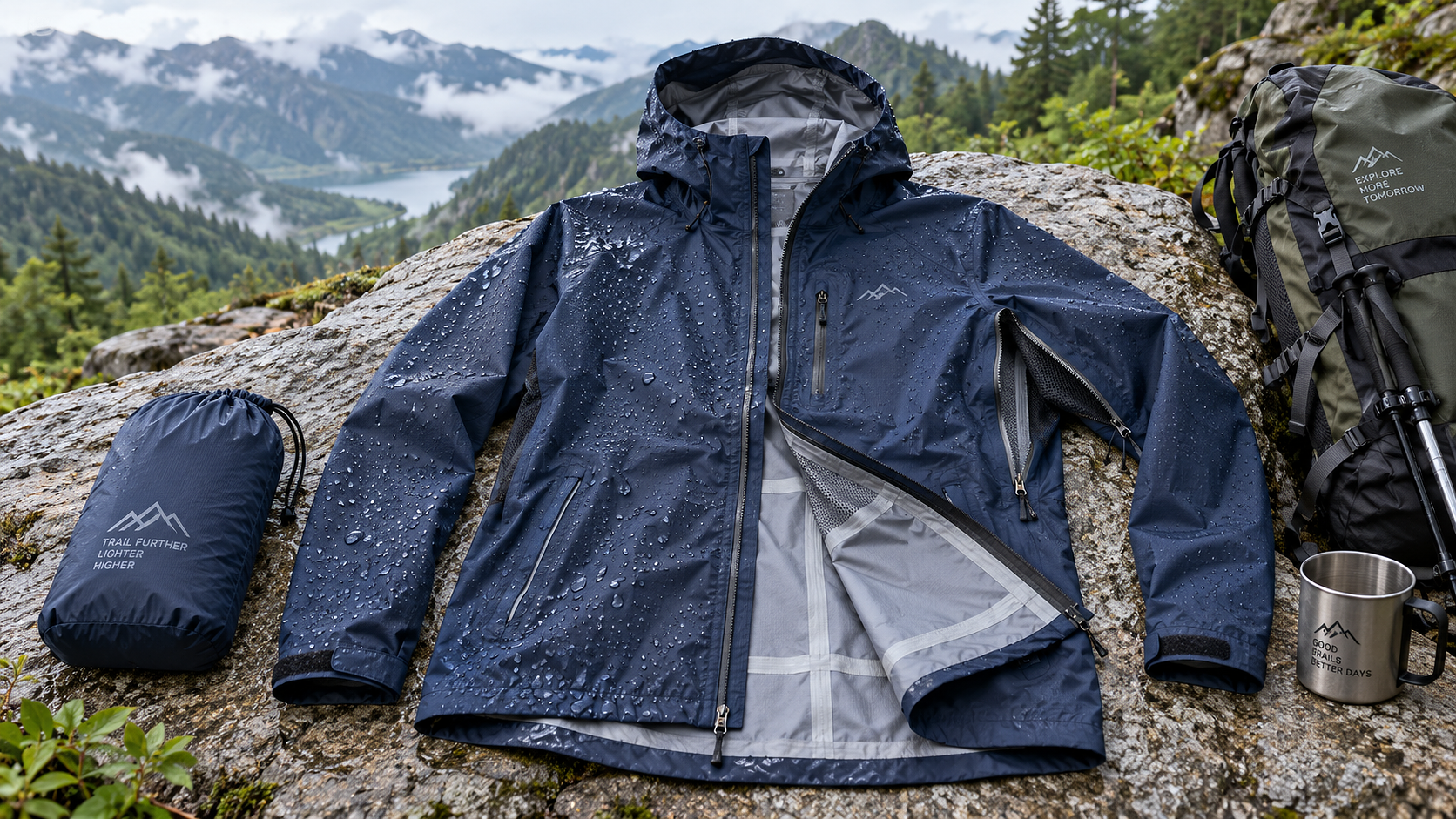
For most hikers, the best rainwear is a waterproof shell with reliable seam sealing, effective ventilation, and enough durability for the pack they carry. A lighter jacket makes sense when rain is occasional and shelter is close. Longer walks in exposed terrain justify more substantial protection, especially when wet clothing would make it difficult to stay warm.
Choosing hiking rainwear starts with the conditions in which you will actually wear it. A steep climb in humid weather creates a different problem from a slow walk through cold, persistent rain. Waterproof ratings help assess the fabric, but comfort also depends on how easily heat escapes, whether the jacket fits over your layers, and how its construction handles repeated use.
Waterproof protection: look beyond the fabric rating
A waterproof rating commonly describes hydrostatic head: the water pressure a fabric can resist before water penetrates under a specified test. Higher figures indicate greater resistance within comparable testing conditions. They do not establish how an entire jacket performs after abrasion, repeated packing, or years of use.
That distinction matters because rainwear can admit water through places the fabric test never evaluates. Untaped seams, poorly protected zippers, loose cuffs, and a hood that channels water toward the neck can undermine an otherwise capable material. For sustained rain, look for fully sealed seams and closures designed to keep water out. A claim of “water resistance” alone offers less assurance for prolonged exposure.
Pressure also changes the demands on the shell. Backpack straps press wet fabric against the shoulders, while kneeling or sitting on wet ground loads rain trousers. If you carry a substantial pack or expect long periods of rain, waterproof performance needs to remain dependable in those contact areas. Fabric construction and its condition deserve attention alongside the advertised rating.
Water beading and waterproofing serve different purposes
The durable water repellent finish, usually called DWR, helps droplets bead and roll off the outer fabric. The membrane or waterproof coating beneath it provides the main barrier against water. A jacket can lose its surface beading while its waterproof barrier remains intact.
When the outer fabric becomes saturated, often described as “wetting out,” the shell can feel colder and heavier, and moisture transfer may become less effective. Sweat can then accumulate inside. This makes a jacket feel as though it leaks even when rain has not passed through the membrane.
Cleaning and restoring water repellency according to the garment’s care instructions can help. Applying another surface treatment will not repair a torn membrane, peeling laminate, or failed seam tape. When evaluating older rainwear, examine those areas before spending money on maintenance products.
A PFAS-free DWR claim concerns the water-repellent treatment; it does not, by itself, tell you how waterproof or breathable the complete garment will be. Assess the jacket’s construction, care requirements, and intended use separately.
Breathability matters, but ventilation often decides comfort
A breathable waterproof fabric allows water vapor to move through it under suitable conditions. That process has limits. On a hard climb, your body may produce moisture faster than the fabric can release it. Warm, humid weather makes the situation harder because the conditions driving moisture transfer are less favorable.
Breathability specifications can be difficult to compare. Moisture vapor transmission rate, or MVTR, measures vapor transfer under a particular test procedure; higher results indicate more transfer within that method. Resistance to evaporative heat transfer, or RET, expresses resistance to evaporation; lower results indicate less resistance. Different procedures and conditions can produce results that do not translate into a fair comparison between jackets.
If two products use different tests, avoid choosing solely by the larger breathability claim. Even comparable laboratory results cannot account for your pace, clothing layers, pack coverage, or the humidity on the trail. A highly breathable shell can still leave you damp during sustained exertion.
Ventilation gives you a more direct way to release heat and moist air. Underarm zippers are useful because you can open them while keeping the front of the jacket closed against rain. Adjustable cuffs and a front zipper also help, although opening them too far can admit water. Mesh-lined pockets may provide airflow, but only when the design permits it and your pack does not obstruct them.
For hikers who climb quickly or sweat heavily, easy-to-operate vents deserve considerable weight in the buying decision. Check whether you can reach them while wearing your pack. Small zipper pulls or awkward positioning can make a useful feature frustrating precisely when you need it.
What you wear underneath also affects the result. Excess insulation increases sweating, and a soaked base layer stays uncomfortable after you slow down. Start demanding climbs slightly cool, adjust layers early, and open vents before moisture builds up. Rainwear manages weather exposure; it cannot fully compensate for overheating.
Weight savings come with construction choices
A low packed weight is valuable when a jacket spends most of the day in your backpack. However, manufacturers can reduce weight through thinner fabric, fewer pockets, smaller closures, reduced coverage, or simpler construction. Those changes have different consequences, so the weight figure alone tells you little about suitability.
Very light fabric may be appropriate for maintained trails and occasional showers. Frequent contact with branches, rock, and backpack straps gives you more reason to prioritize abrasion resistance. Fabric denier describes yarn size and can provide context, but it is not a complete durability measure. Fiber, weave, reinforcement, and construction also influence wear.
Layer descriptions help explain how the waterproof material is protected:
- Two-layer construction bonds the outer fabric to a waterproof layer and generally uses a separate lining. It can feel comfortable, though the lining adds bulk.
- Two-and-a-half-layer construction uses an outer fabric, a waterproof layer, and a lightweight protective treatment on the inside. It can pack compactly, but interior feel and resistance to wear vary.
- Three-layer construction bonds the outer fabric, waterproof layer, and inner backing together. The backing protects the waterproof layer and can make the garment more suitable for repeated use under a pack.
These categories do not create a simple ranking. A lightweight three-layer jacket can weigh less than a heavily featured two-and-a-half-layer model. Likewise, three-layer construction does not guarantee better ventilation or a better fit. Compare the complete garment and how you intend to use it.
For occasional day hikes, compact packing and adequate protection may justify a simpler shell. For repeated backpacking trips in wet conditions, a more durable construction and usable vents can be worth the additional weight. Saving weight has less value if the jacket is uncomfortable enough that you delay putting it on.
Match the shell to your hikes, then check it with your pack
Use your most likely demanding conditions to narrow the choice. Buying for a rare extreme can leave you carrying unnecessary bulk, but buying only for pleasant forecasts can leave too little protection when a route offers few opportunities to retreat.
- Short walks with easy exits: prioritize packability, sealed seams, and a secure hood. A lightweight shell is a reasonable choice if prolonged exposure is unlikely.
- Fast hikes with sustained climbing: prioritize ventilation, freedom of movement, and cuffs you can adjust easily. Treat breathability figures as supporting information.
- Multi-day trips in persistent rain: prioritize durable construction, reliable closures, sufficient coverage, and a fit that accommodates warm layers.
- Exposed, windy routes: prioritize a hood that stays in place, a hem that seals securely, and adjustments you can operate with cold hands.
Try the jacket with the layers and backpack you expect to use. Reach overhead and forward: the hem should retain useful coverage, and the shoulders should allow movement without pulling tight. Turn your head with the hood cinched. A hood that obscures your view or leaves your face exposed becomes a practical problem in wind-driven rain.
Fasten the hip belt and check pocket access, zipper position, and comfort around the shoulders. Too little room can restrict movement and compress insulation; excessive loose fabric can flap and complicate hood adjustment. The useful fit is the one that works while moving under load.
Consider lower-body protection as part of the same decision. Rain trousers add weight and can trap heat, but become more valuable in cold, prolonged rain or wet vegetation. Side openings help with ventilation and allow easier changes over footwear. Check that the jacket hem and trouser waist maintain coverage when bending.
When choosing between two suitable jackets, give preference to the one whose protection and adjustments work with your own kit. Open its vents, tighten its hood, reach into its pockets, and pack it away. Those actions reveal whether you can manage changing weather comfortably throughout a hike.