
Industry Portal
Related News
- 00
0000-00
Sustainable Travel Material Standards: Which Certifications Should Buyers Check? - 00
0000-00
Which Silicone Luggage Accessories Help Protect Your Suitcase During Air Travel? - 00
0000-00
Global Travel Accessory Market: Demand Shifts, Channel Growth, and Risks for Brands - 00
0000-00
Choosing Coated High-Performance Fabrics for Weather-Resistant Outdoor Applications - 00
0000-00
What Travel Goods Buyers Should Check When Evaluating Private-Label Suppliers
Rainwear Buying Guide: Breathability vs Waterproofing
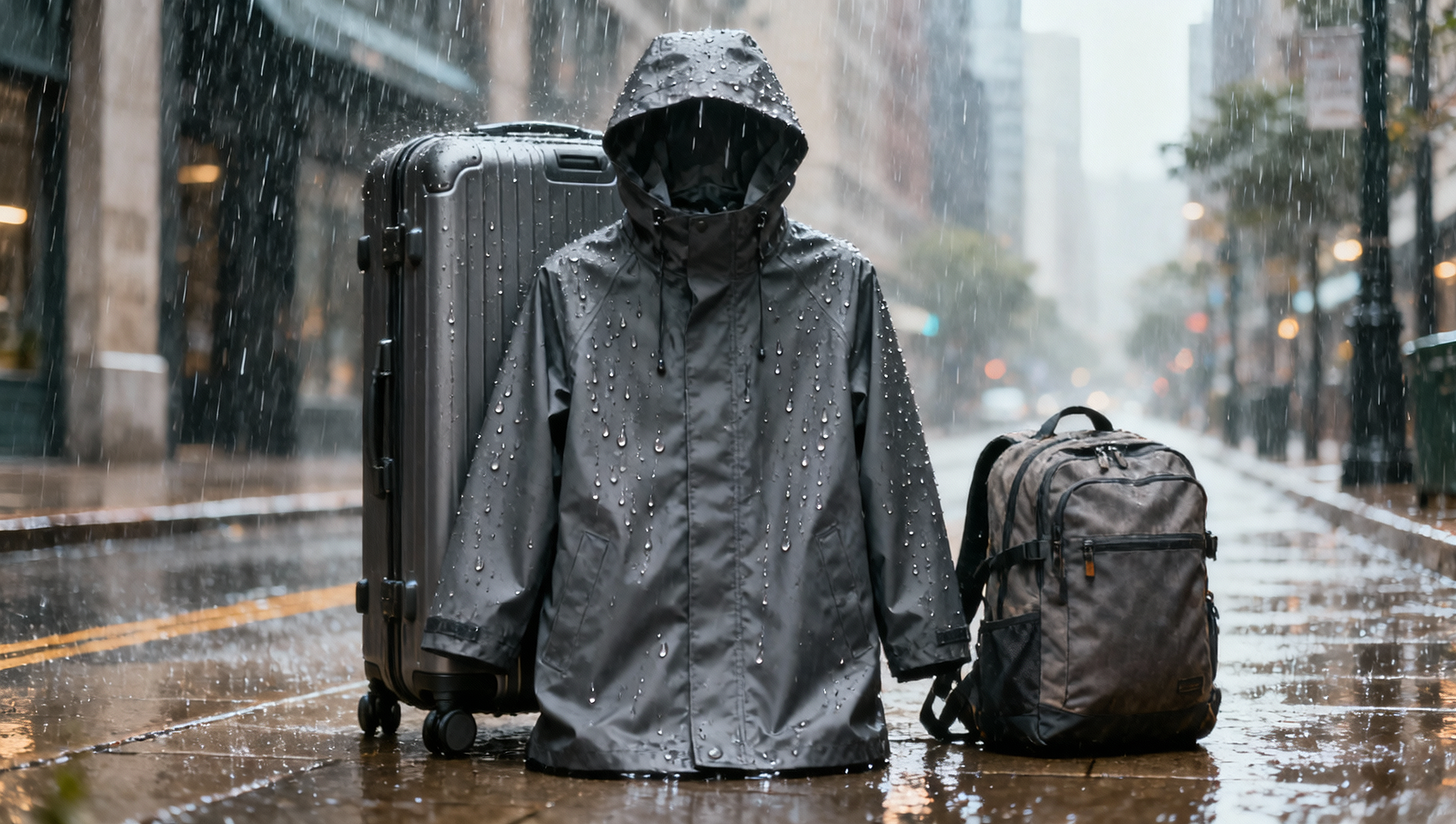
Rainwear Buying Guide: why the balance matters in real use
Good rainwear is not just about blocking rain. It also has to manage heat, sweat, movement, and changing weather during everyday use.
That is why breathability versus waterproofing is rarely a simple trade-off. The better question is which balance fits the way the jacket will actually be worn.
In urban commuting, travel, and light outdoor movement, discomfort often comes from moisture trapped inside, not only from rain outside.
LROS follows this issue closely because functional rainwear now sits beside umbrellas, luggage, and commuter packs in one connected system of all-weather mobility.
When rainwear performs well, the result feels invisible. You stay dry, your layers stay lighter, and the rest of your carry setup works more smoothly.
Actual use changes what “better” rainwear means
Two jackets can both be labeled waterproof, yet feel completely different after forty minutes in rain. Fabric technology explains part of that difference, but usage explains the rest.
A short station-to-office walk creates one kind of demand. A warm, humid city day with a laptop backpack creates another.
The same applies to travel. Standing at a taxi line, pulling a PC suitcase through wet terminals, and crossing windy streets place different stress on rainwear.
In practice, three conditions usually decide the right balance:
- Rain intensity and exposure time
- Body heat generated by walking, stairs, or cycling
- What else you carry, especially backpacks or shoulder bags
This is where material science becomes practical. TPU laminations, microporous membranes, and PFAS-free DWR finishes affect not only dry performance, but comfort over time.
For commuting, breathable rainwear usually wins unless exposure is long
Most daily commuting does not happen in extreme rain. It happens in bursts: subway exits, short street crossings, parking lots, and quick transfers between buildings.
In these conditions, heavily sealed rainwear can become unpleasant fast. A jacket may keep rain out, yet feel clammy after ten minutes of brisk walking.
That is why many commuters benefit from lightweight rainwear with moderate waterproofing and better vapor release. The goal is balanced comfort, not expedition-level protection.
A breathable shell also works better with modern commuter systems. If you carry a suspension backpack or laptop bag, trapped heat around the back panel becomes more noticeable.
Look for features that help in motion:
- Microporous or membrane-based fabric
- Pit zips or vented yokes
- Smooth lining that layers easily over office wear
- A hood shape that works with umbrellas
A common mistake is buying thick rainwear for short urban use. More protection on paper can mean less comfort every weekday.
During travel, waterproofing becomes more important than many expect
Travel adds delays, waiting time, and repeated transitions. You may move from airport curb to shuttle, then from station platform to hotel on foot.
Here, rainwear faces longer exposure than commuting. It also has to protect what sits underneath, including electronics, passports, and layered clothing.
For this reason, travel rainwear usually needs stronger waterproofing, better seam sealing, and more reliable surface beading.
That does not mean breathability stops mattering. A travel jacket still needs to vent during long walks through terminals or city streets.
The better approach is a slightly more protective shell that still packs down well beside luggage. LROS often frames this as system compatibility rather than isolated garment choice.
If a jacket is too bulky, too noisy, or slow to dry in a hotel room, it becomes inconvenient even when it tests well in the lab.
Where travel rainwear should be judged more carefully
Light outdoor use demands a different balance than city wear
Once walking time extends and elevation changes enter the picture, breathable rainwear becomes much more valuable.
A casual park loop in drizzle is still close to commuting. A half-day trail, however, creates steady body heat and moisture from inside.
In this setting, poor breathability can soak base layers through condensation, even when the rainwear never leaks externally.
That is why microporous breathable rainwear has gained ground. The best versions push water away on the surface while letting vapor escape more efficiently.
Still, the environment matters. Humid climates reduce real-world breathing performance because the vapor gradient becomes weaker.
So for warm, wet regions, mechanical ventilation can matter almost as much as fabric claims. Pit zips and two-way front zippers deserve more attention than they often get.
Different rainwear constructions suit different conditions
Many buying mistakes come from treating all waterproof jackets as one category. Construction changes feel, durability, and daily usability.
PFAS-free finishes also deserve attention. They answer growing compliance and environmental pressure, but performance depends on formulation and maintenance, not label language alone.
The easiest buying errors happen when one number controls the decision
Many shoppers chase the highest waterproof rating and ignore wear pattern. That often leads to overbuilt rainwear for mild use.
The reverse also happens. Soft, very breathable jackets get chosen for long exposure or wind-driven rain, then disappoint during storms.
Another blind spot is backpack pressure. Shoulder straps and back panels can reduce perceived breathability and stress the fabric surface.
Maintenance is often ignored too. Dirty face fabric and worn DWR can make good rainwear wet out faster, which hurts comfort even before leakage begins.
- Do not judge rainwear by waterproof rating alone
- Do not assume city use and light hiking need the same shell
- Do not ignore drying time, pack size, and cleaning needs
- Do not separate the jacket from the rest of the carry system
A practical way to choose rainwear before comparing brands
Start with your longest likely exposure, not your worst imagined storm. That usually gives a clearer baseline.
Then think about movement level. Fast walking, stairs, and warm transit systems increase the value of breathable rainwear more than many product pages suggest.
After that, check the full setup. If you often carry a backpack, roll luggage, or alternate between umbrella and shell, the rainwear should support that workflow.
A useful shortlist often looks like this:
- Urban daily use: light, breathable rainwear with practical venting
- Frequent travel: waterproof shell with better seams and packability
- Light outdoor movement: breathable membrane shell with active ventilation
- Mixed business wear: technical trench that balances appearance and function
The strongest choice is rarely the most extreme one. It is the rainwear that stays comfortable across the conditions you actually repeat.
Before deciding, map your typical routes, weather exposure, carry load, and maintenance tolerance. That simple check makes waterproofing and breathability easier to judge in context.