
Industry Portal
Related News
- 00
0000-00
Travel Product Trends Shaping Demand: Anti-theft, Lightweight Materials, and Sustainability - 00
0000-00
Coated UV Protective Fabrics: How Coating Type Affects UPF, Durability, and Hand Feel - 00
0000-00
Sustainable Textile Manufacturing Cost Breakdown: Energy, Water, Chemicals, and Certification - 00
0000-00
How to Choose Wind Weather Sensors for Outdoor Installations: Accuracy, Range, and Mounting - 00
0000-00
Rain Ponchos Pricing Explained: What Changes Cost Across Materials, MOQ, and Branding
Fatigue Test Luggage Standards Explained: What Buyers Should Check Before Sourcing Suitcases
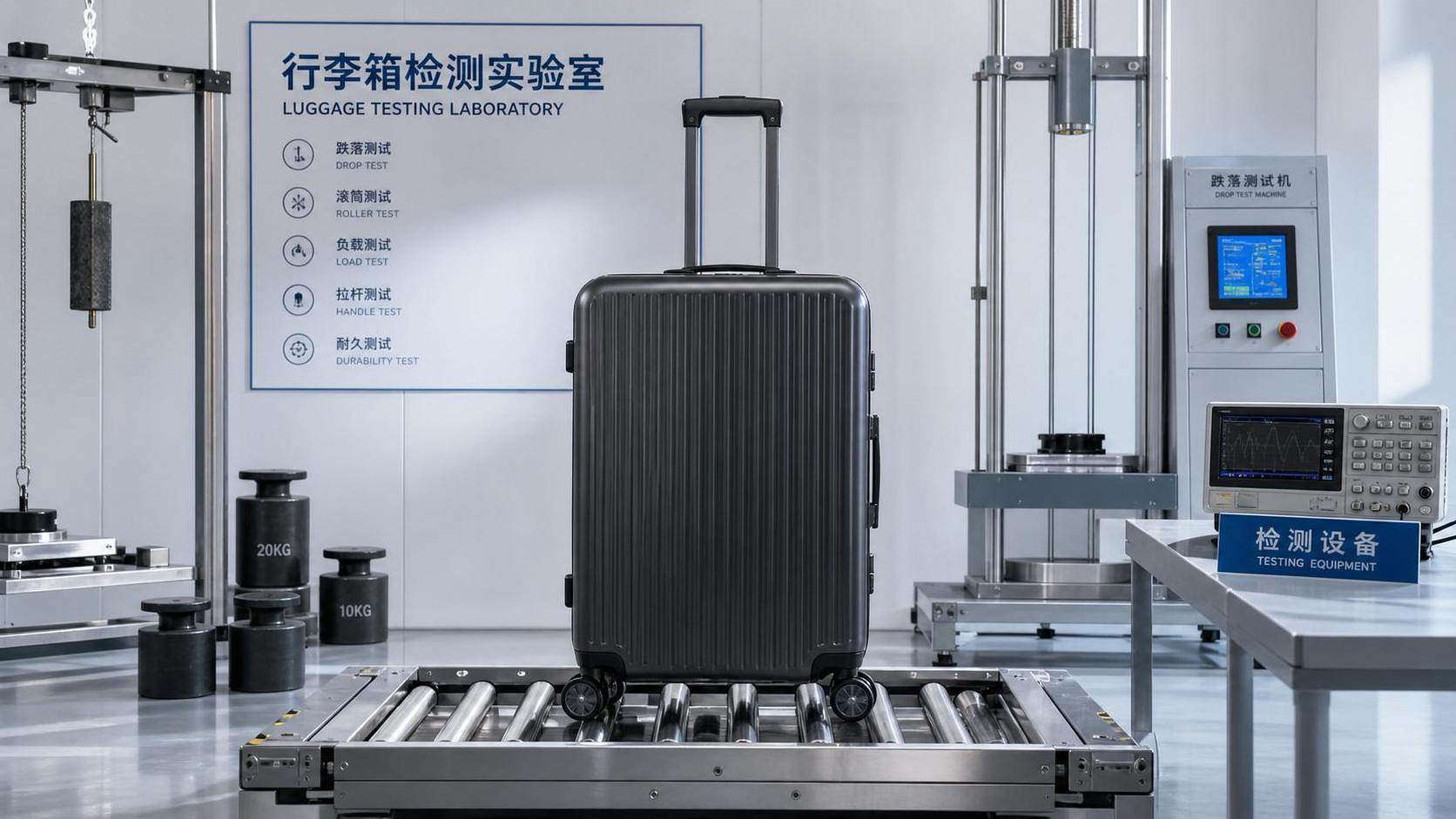
Why do fatigue test luggage standards matter before a suitcase order is placed?
A suitcase can look strong in a showroom and still fail after repeated travel cycles.
That is why fatigue test luggage standards matter long before color, finish, or packaging decisions are finalized.
In simple terms, these standards examine how luggage performs under repeated motion, impact, load, and handling stress.
The goal is not only to prove initial strength.
The real question is whether wheels, handles, shells, and zippers keep working after many cycles.
This matters even more in travel goods, where returns often come from cumulative damage rather than one dramatic break.
Within the wider LROS knowledge framework, luggage durability is usually judged the same way other performance goods are judged.
Umbrella ribs face wind cycles, rainwear faces waterproof wear cycles, and suitcases face rolling and lifting cycles.
So fatigue test luggage standards are not a paperwork detail.
They are a practical filter for supplier evaluation and long-term quality risk control.
What do fatigue test luggage standards actually measure?
Many people assume these standards only test wheel endurance.
In reality, the scope is usually broader.
Different test protocols may cover rolling fatigue, handle pull cycles, telescopic handle extension cycles, drop resistance, and loaded travel simulation.
For hard-shell cases, shell rebound and crack resistance are also closely linked to fatigue performance.
A useful way to read fatigue test luggage standards is to ask what repeated action is being simulated.
- Wheel tests simulate long rolling distance on rough or uneven surfaces.
- Handle tests simulate lifting a packed case into cars, racks, and conveyors.
- Telescopic handle tests simulate frequent extension, locking, and retraction.
- Drop tests simulate baggage handling shocks and accidental falls.
- Corner and shell tests simulate stress concentration after repeated impacts.
Need attention here: passing a single test does not mean the whole suitcase is durable.
A strong shell with weak wheel housings can still fail in market use.
That is why fatigue test luggage standards should be reviewed as a system, not as one isolated number.
Which parts deserve the closest review when comparing test reports?
The most common mistake is focusing only on whether a report says pass or fail.
A better approach is to compare the tested parts, the load conditions, and the failure definition.
Two reports may both look acceptable while using very different thresholds.
In actual sourcing, wheel assemblies usually deserve extra attention.
Caster design, axle quality, TPE wheel formulation, and mounting reinforcement often decide fatigue life.
The same applies to telescopic handles.
A clean extension feel in one sample does not confirm long-cycle locking reliability.
Are all fatigue test luggage standards equally useful for every sourcing project?
Not necessarily.
The right standard depends on product positioning, channel expectations, and likely use intensity.
A cabin case for short business trips does not face the same abuse as a large checked suitcase.
Likewise, a lightweight fashion case may prioritize weight and appearance, while a travel-focused line needs stronger fatigue margins.
More common practice is to align fatigue test luggage standards with the expected complaint pattern.
- For checked luggage, review wheel fatigue, drop resistance, and corner integrity first.
- For cabin luggage, review handle cycles, wheel noise, and shell dent recovery.
- For e-commerce channels, review packaging plus post-shipment damage resistance.
- For premium lines, check cosmetic tolerance after testing, not only structural survival.
This is where broader category knowledge becomes useful.
LROS often links material behavior with real application outcomes across luggage, rainwear, and outdoor products.
That perspective helps when deciding whether a test report truly fits the intended retail and logistics scenario.
What red flags appear when suppliers discuss fatigue test luggage standards?
One red flag is a report without clear product identification.
If the shell thickness, wheel system, or handle structure are not traceable, the report has limited value.
Another warning sign is selective reporting.
Some suppliers highlight shell impact data but avoid wheel fatigue results, where failures are more likely.
There is also the issue of outdated testing.
A factory may change wheel material, handle tubing, or zipper sourcing after the original report was issued.
In that case, old fatigue test luggage standards documentation may no longer represent current production.
Watch for these practical gaps:
- No mention of accredited lab or test method reference.
- No loading details, cycle counts, or environmental conditions.
- Report uses a similar model, not the quoted one.
- Internal test claims are not supported by repeatable records.
- Only one pre-production sample was tested.
A reliable evaluation usually combines third-party reports with factory quality control records and pilot sample review.
How should fatigue test luggage standards shape the final sourcing decision?
The best use of fatigue test luggage standards is comparative, not decorative.
Use them to narrow supplier risk, define acceptable construction, and set repeatable approval rules.
A practical decision process often works better than chasing the highest claim.
Start by matching the suitcase type to expected travel intensity.
Then compare which fatigue test luggage standards were used, how the tests were loaded, and whether the tested build matches the production quote.
If two options pass similar tests, look deeper at component consistency, corrective action history, and replacement part stability.
That often predicts field performance better than a polished presentation.
Before confirming a project, it helps to prepare a short checklist:
- Confirm the exact standard or method used for fatigue testing.
- Match test load and cycle count to the target market use level.
- Verify that wheels, handles, shell, and zipper system are all covered.
- Ask whether any material or component changed after the report date.
- Keep approval criteria in writing for future repeat orders.
In the end, fatigue test luggage standards are most useful when they support a sourcing standard, not just a single shipment decision.
That gives a clearer basis for comparing factories, controlling claims, and reducing avoidable durability disputes in the luggage supply chain.