
Industry Portal
Related News
- 00
0000-00
Sustainable Travel Material Standards: Which Certifications Should Buyers Check? - 00
0000-00
Which Silicone Luggage Accessories Help Protect Your Suitcase During Air Travel? - 00
0000-00
Global Travel Accessory Market: Demand Shifts, Channel Growth, and Risks for Brands - 00
0000-00
Choosing Coated High-Performance Fabrics for Weather-Resistant Outdoor Applications - 00
0000-00
What Travel Goods Buyers Should Check When Evaluating Private-Label Suppliers
Tags
US Customs Starts Luggage Safety Label Rule
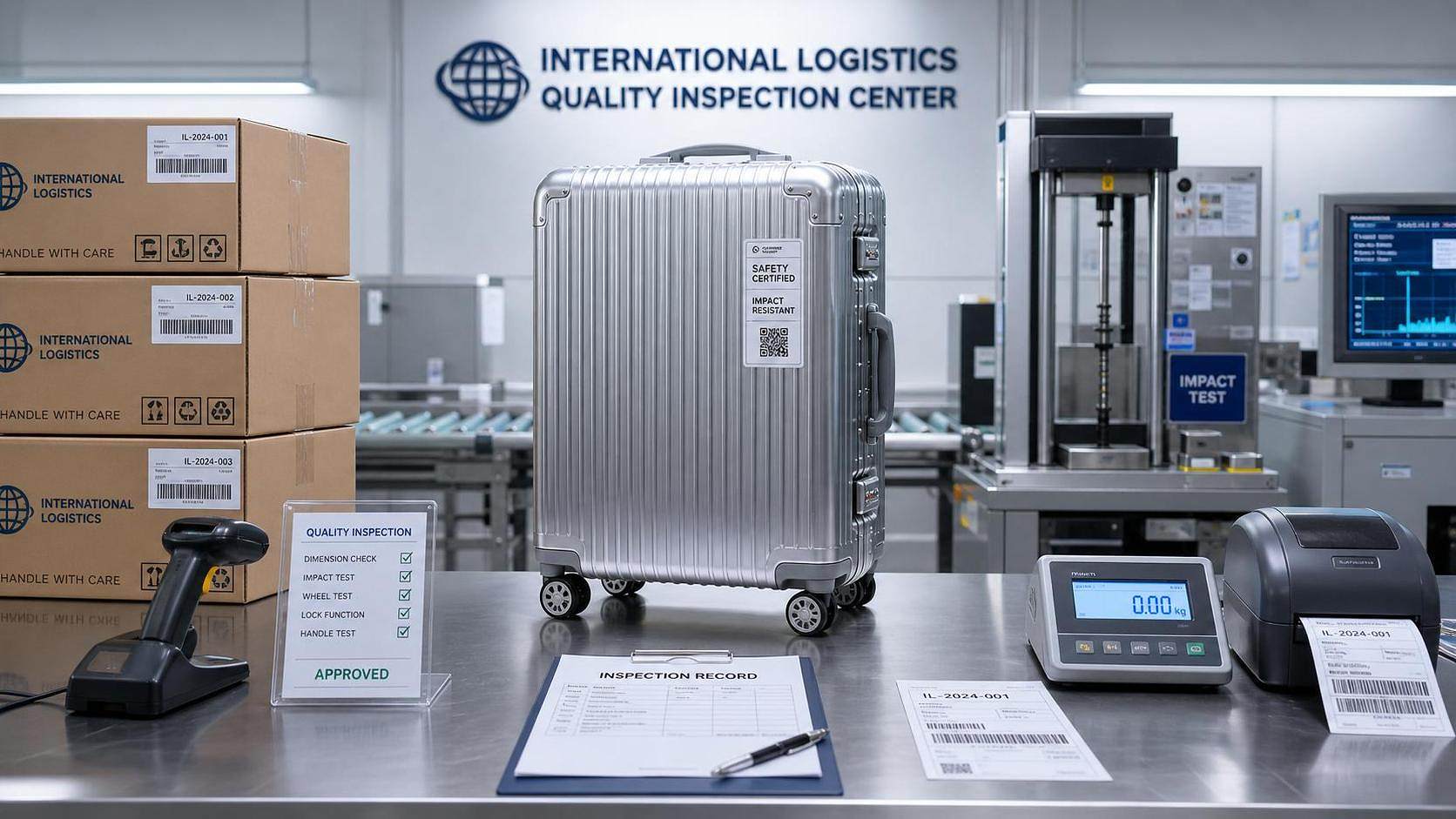
On July 8, 2026, U.S. Customs and Border Protection (CBP), together with UL Solutions, launched a targeted review under the “Luggage Safety Initiative” focused on imported Aluminum-Magnesium Suitcases. The immediate point of attention for suitcase brands, manufacturers, importers, and North American distributors is that a new labeling requirement will take effect on September 1, 2026, tying product entry and inspection readiness more closely to impact-resistance verification and traceable product documentation.
What the new requirement confirms
According to the information provided, CBP and UL Solutions started the special luggage safety review on July 8, 2026. From September 1, 2026, all imported Aluminum-Magnesium Suitcases must carry a UL Verified Impact Resistance Label based on the updated UL 1131-2026 standard. The required label must include a batch number, impact test data, and a QR code traceability link. The measure was introduced in response to a recent increase in airport baggage damage complaints, and it directly affects inspection procedures for North American distributors as well as brand market-access qualifications.
Where the pressure will appear across the chain
Import compliance moves closer to the product itself
From an industry perspective, direct trading companies and importers are likely to feel the impact first because the requirement is attached to imported products rather than treated as a separate commercial preference. The practical effect is that product labeling, supporting test information, and traceability readiness become part of shipment acceptance and customs-facing preparation.
Manufacturing and packaging workflows may need tighter coordination
Analysis shows that manufacturers of Aluminum-Magnesium Suitcases may be affected in the production-to-packout stage, because the label is not limited to a simple visual mark. It must carry a batch number, impact test data, and a QR code traceability link, which means factories and brand owners will need tighter alignment between testing records, batch management, and final labeling execution.
North American distributors face a more structured receiving process
Observably, distributors in North America are directly named as affected parties because the measure changes inspection expectations. What deserves closer attention is whether incoming goods can be checked efficiently against the new label content, especially where acceptance procedures already depend on documentation consistency, batch traceability, and product qualification status.
Brand access control becomes more document-sensitive
For brand owners, the stated link to market-access qualifications suggests that compliance is no longer only a packaging detail. It is more appropriate to understand this as a requirement that may influence how brands are screened for entry into distributor channels, particularly when proof of impact-resistance verification and traceability must be visible on-product.
What companies should watch now
Track whether official wording is further clarified
Analysis shows that the core rule is already clear on scope, timing, and label content, but businesses should continue monitoring whether any additional official explanation appears around implementation details, inspection interpretation, or documentation expectations tied to the UL 1131-2026 update.
Review SKU coverage before the September 1 deadline
What deserves closer attention is product mapping. Companies handling Aluminum-Magnesium Suitcases for the U.S. market should verify which imported models fall within the stated requirement, so label preparation, batch matching, and shipment scheduling are not handled too late in the cycle.
Check whether traceability data can be matched consistently
Observably, the QR code traceability link and batch-number requirement raise a practical issue beyond design compliance: the information shown on the label must align with the underlying product records. For operators, this puts pressure on the handoff between testing data, labeling files, shipment documents, and distributor-side verification.
Prepare customer and channel communication in advance
From an industry perspective, importers, suppliers, and brand teams should not treat this only as a customs matter. Since North American distributor inspection processes and brand qualification are directly mentioned, commercial teams may need to brief channel partners in advance on how the new label will appear and how supporting records will be presented if questioned.
Why this looks larger than a routine packaging update
This section is an observation rather than a statement of fact. Analysis shows that the development is best read as more than a minor labeling adjustment, because the required label combines verification, test-related information, and traceability in a single compliance marker. That gives the measure relevance not only for customs-facing teams but also for factory execution, distributor intake, and brand qualification management. At the same time, it is too early to treat it as a settled long-term restructuring of the luggage trade; the market still needs to observe how consistently the requirement is enforced after September 1, 2026.
How to interpret the signal at this stage
At this stage, it is more appropriate to understand the initiative as a concrete short-term compliance change with potential longer-term signaling value. The short-term element is clear: imported Aluminum-Magnesium Suitcases for the U.S. market will need the specified UL Verified Impact Resistance Label from September 1, 2026. The longer-term question is whether this becomes a broader model for product-entry control based on verifiable durability and traceability. That second point still requires continued observation rather than firm conclusion.
Basis of this article
This article is based on the user-provided news title, event date, and event summary regarding the July 8, 2026 launch of the “Luggage Safety Initiative” by CBP and UL Solutions. For this type of development, source categories typically worth checking include official notices, company statements, industry association updates, authoritative media reports, and standards organization documents. No specific official source link was provided in the input, so the precise official publication path still needs ongoing verification. Further follow-up should focus on any additional official clarification, implementation wording, and market-side inspection practice after the September 1, 2026 effective date.