
Industry Portal
Related News
- 00
0000-00
Sustainable Travel Material Standards: Which Certifications Should Buyers Check? - 00
0000-00
Which Silicone Luggage Accessories Help Protect Your Suitcase During Air Travel? - 00
0000-00
Global Travel Accessory Market: Demand Shifts, Channel Growth, and Risks for Brands - 00
0000-00
Choosing Coated High-Performance Fabrics for Weather-Resistant Outdoor Applications - 00
0000-00
What Travel Goods Buyers Should Check When Evaluating Private-Label Suppliers
Tags
CBP Extends Inquiry to Luggage Final Assembly
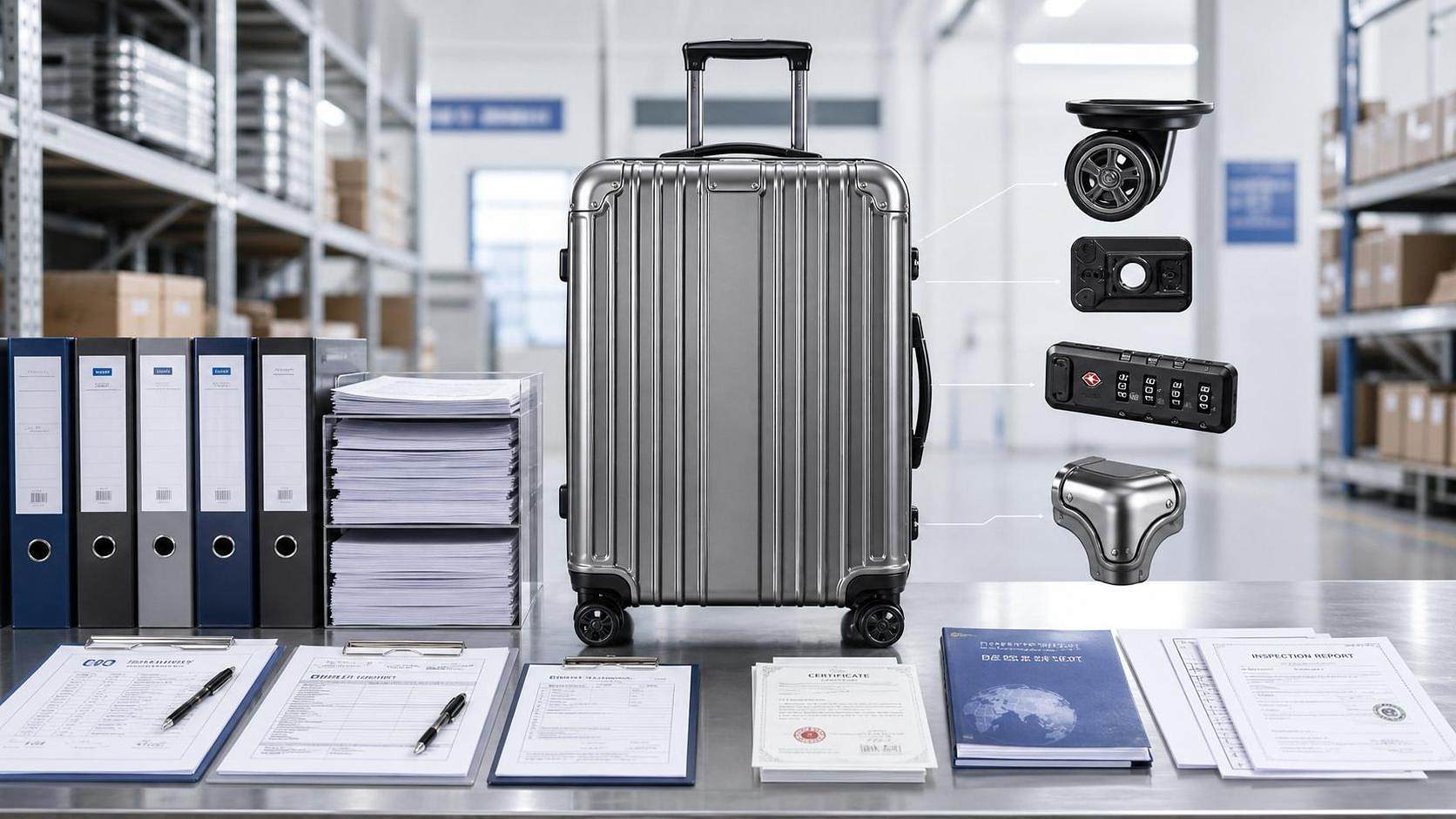
On June 28, 2026, U.S. Customs and Border Protection updated its case notice by expanding an anti-circumvention inquiry from Silent Casters and TSA Locks components to the full assembly stage of aluminum-magnesium alloy luggage. The notice also calls for importers to provide complete bill of materials traceability records and origin declarations. For exporters, OEM/ODM manufacturers, importers, and supply chain teams involved in luggage shipped to the U.S., the development is worth close attention because it directly affects customs clearance timing and the cost of compliance for products fitted with silent casters and TSA locks.
The confirmed change in the CBP notice
According to the information provided, CBP updated its filing notice on June 28, 2026. The anti-circumvention inquiry, which had previously focused on Silent Casters and TSA Locks components, was extended to the full assembly stage of aluminum-magnesium alloy luggage. The updated notice requires importers to submit complete BOM traceability documentation together with origin declarations. The stated business impact is a direct effect on customs clearance efficiency and compliance costs for China-based OEM and ODM factories exporting luggage with silent casters and TSA locks to the U.S. market.
Where the pressure is likely to appear first
Export transactions may face heavier document review
From an industry perspective, exporters and direct trading companies are likely to feel the change through document preparation and shipment release timing. Because the inquiry has moved beyond components and into the full assembly stage, the focus is no longer limited to whether specific parts are involved, but also to how the finished product is documented. What deserves closer attention is whether shipment files can support BOM traceability and origin statements in a form that can withstand customs review.
OEM and ODM factories may need tighter assembly-level records
For processing and manufacturing businesses, the practical issue is that assembly records now matter more in the compliance chain. Analysis shows that factories shipping aluminum-magnesium alloy luggage with silent casters and TSA locks to the U.S. may need to pay closer attention to how component sourcing, assembly relationships, and origin-related records are organized. The pressure is likely to fall on internal recordkeeping, factory-to-importer data transfer, and the consistency of product-level documentation used in export files.
Importers and supply chain service providers may see slower handoffs
Importers, customs-facing service providers, and supply chain coordinators may be affected through longer pre-clearance preparation and a greater need to verify paperwork before shipment arrival. Observably, a requirement for complete BOM traceability and origin declarations can increase the amount of coordination needed between factories, traders, and the importing side. The effect is not only administrative; it can also influence booking decisions, handoff timing, and the sequencing of compliance checks before goods move.
Buyers may need to revisit supplier document readiness
For procurement teams and brand-side buyers sourcing luggage for the U.S. market, the issue is less about product design than about supplier readiness to support traceability. What deserves closer attention is whether vendors can provide consistent BOM-related records and origin declarations without delaying order execution. In practice, document readiness may become a more visible part of supplier assessment for affected luggage categories.
What companies should watch in current operations
Check whether BOM traceability can be produced at shipment level
Analysis shows that the first practical question is whether the importer and manufacturing side can produce complete BOM traceability records for the affected luggage shipments. Where records exist only in fragmented internal systems or across multiple suppliers, the risk may appear in response time and document consistency rather than in the product itself.
Review how origin declarations are supported
Companies involved in exporting or importing the affected products should pay attention to how origin declarations are prepared and supported by underlying records. The input information confirms that such declarations are required, but it does not provide the full execution standard. It is therefore more appropriate to treat this as an area requiring careful verification rather than assume a settled documentation format.
Reassess lead times for U.S.-bound orders
Because the provided information states that customs clearance timing may be affected, companies should watch whether order planning, shipping schedules, and customer delivery commitments leave enough room for additional document review. This is especially relevant for businesses handling repeated OEM or ODM export orders of luggage fitted with silent casters and TSA locks.
Track any further clarification in compliance practice
The current notice signals a broader compliance focus, but the input does not include detailed enforcement language beyond the expanded scope and document requirements. Observably, companies should continue monitoring whether official wording, review practice, or trade-facing compliance expectations become more specific over time.
Why this reads as an execution signal
Analysis shows that this development is more significant as a compliance signal than as a standalone trade headline. The key change is that the inquiry scope now reaches the full assembly stage of aluminum-magnesium alloy luggage rather than remaining confined to individual Silent Casters and TSA Locks components. That shift suggests closer scrutiny of how finished products are documented in cross-border trade. At the same time, because the input does not provide a detailed enforcement timetable or case outcomes, it is more appropriate to understand this as a rule-enforcement signal with practical consequences already visible in documentation and clearance preparation, while some implementation details still require observation.
How the market should read this update
At this stage, the update is best understood as a concrete compliance change affecting documentation expectations around affected luggage exports to the U.S. It does not by itself confirm every downstream enforcement result, but it clearly raises the importance of BOM traceability, origin support, and assembly-stage record control. A measured reading is that businesses connected to the affected product category should treat the notice as an operational requirement with immediate relevance to customs preparation, while continuing to watch how execution standards develop in practice.
Basis of this article and what still needs verification
This article is based on the user-provided title, event date, and event summary. For events of this kind, commonly relevant source types include official notices, releases from regulatory authorities, customs or trade administration information, industry association updates, standards-related documents, and reporting by authoritative trade media. No specific official source link was provided in the input, so the exact official publication path still needs to be verified on an ongoing basis. Further observation is also needed on any detailed enforcement language, document review expectations, market feedback, and how companies in the affected supply chain implement the new requirements in practice.