
Industry Portal
Related News
- 00
0000-00
Travel Product Trends Shaping Demand: Anti-theft, Lightweight Materials, and Sustainability - 00
0000-00
Coated UV Protective Fabrics: How Coating Type Affects UPF, Durability, and Hand Feel - 00
0000-00
Sustainable Textile Manufacturing Cost Breakdown: Energy, Water, Chemicals, and Certification - 00
0000-00
How to Choose Wind Weather Sensors for Outdoor Installations: Accuracy, Range, and Mounting - 00
0000-00
Rain Ponchos Pricing Explained: What Changes Cost Across Materials, MOQ, and Branding
Tags
CPSC Tightens Label Rules for Silent-Caster Luggage
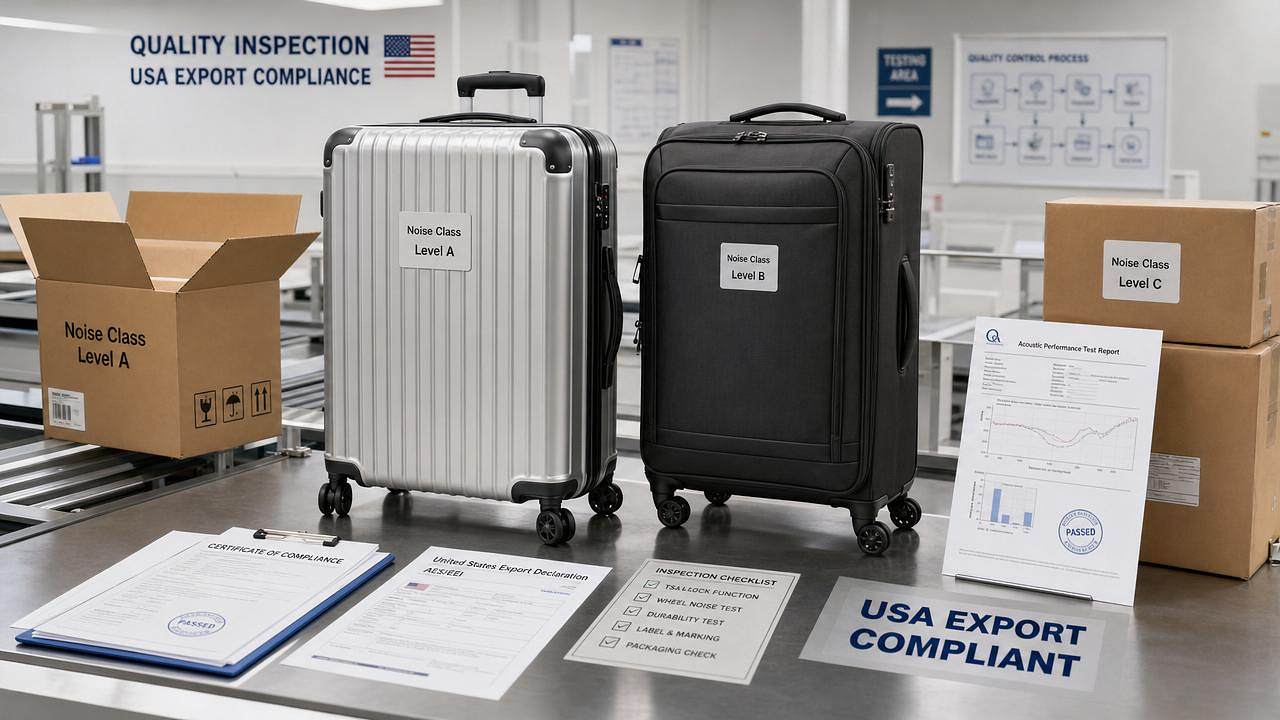
On June 12, 2026, the U.S. Consumer Product Safety Commission (CPSC) issued a supplemental enforcement notice tied to ASTM F2972-26, adding new labeling and document requirements for luggage sold to the U.S. market that uses silent caster wheels and TSA locks. For exporters, manufacturers, sourcing teams, testing-related service providers, and shipment coordinators, the immediate concern is not only product configuration but also whether packaging and accompanying documentation can match the new compliance wording before the September 1, 2026 enforcement date.
What the new U.S. requirement formally changes
According to the provided event summary, the CPSC supplemental notice released on June 12, 2026 requires all Silent Casters & TSA Locks luggage products sold to the United States to carry a mandatory “Noise Class Level” label using three grades, A, B, or C, on packaging and in accompanying documents starting from September 1, 2026.
The same summary states that the products must also include the reference number of a third-party acoustic test report. The requirement applies to both hard-shell and soft-sided luggage as long as the product includes silent spinner wheels. Products that do not meet the requirement may face detention risk at port.
Where the disruption is likely to appear first
Export-facing suppliers will need to reconcile product, packaging, and paperwork
For manufacturers and export traders shipping luggage to the U.S., the main impact is that compliance now extends beyond the physical product and into packaging execution and accompanying documentation. Analysis shows that teams handling export lots will need to pay closer attention to whether each shipment is supported by a matching acoustic report reference number and whether the declared “Noise Class Level” appears consistently across the required materials.
Procurement and order management may face document screening pressure
For sourcing teams and buyers, the change matters because the rule is framed as a market-entry and shipment-compliance issue rather than a purely technical preference. From an industry perspective, purchase orders, supplier onboarding checks, and delivery acceptance standards may need to focus more closely on report availability, label readiness, and whether the covered luggage models fall within the silent-caster scope described in the notice.
Testing and compliance support functions become more operationally relevant
For testing-related service providers and internal compliance teams, the requirement increases the operational importance of acoustic classification records and report traceability. Observably, the new emphasis is not limited to having a test result in principle, but to ensuring that a third-party report number is available for use in packaging and accompanying documents tied to U.S.-bound products.
Logistics and delivery coordination now carry added port-risk considerations
For shipment coordinators, distributors, and supply-chain service providers, the port detention risk noted in the event summary is the practical point of attention. This means pre-shipment checks may need to focus not only on product identity and destination, but also on whether the required label content and supporting report references are already aligned before cargo moves.
What companies should review before the effective date
Check whether covered product lines are already mapped
Companies selling hard-shell or soft-sided luggage with silent spinner wheels into the U.S. market should first identify which SKUs fall within the stated scope. Where product portfolios include mixed wheel configurations, analysis shows that scope identification may become the first practical compliance step before label or document updates are made.
Review packaging files and accompanying document templates
The notice described in the input makes packaging and accompanying documents part of the compliance requirement. What deserves closer attention is whether existing artwork, inserts, manuals, shipment documents, or product-related attachments have a designated place for “Noise Class Level” and the third-party acoustic test report number, and whether those references can be kept consistent across batches.
Prepare for report-reference control rather than broad claims
Because the provided information mentions a mandatory third-party acoustic test report number, companies should pay close attention to document control, version control, and report-to-model matching. This is especially relevant where one supplier, one factory, or one exporter handles multiple luggage variants intended for the same market.
Continue monitoring enforcement wording and execution practice
The input does not provide detailed enforcement procedures beyond the September 1, 2026 timing and port detention risk. It is therefore more appropriate to understand current action items as compliance preparation and document review, while continuing to monitor any further official wording, execution interpretation, or downstream buyer requirements that may clarify how the rule is checked in practice.
Why this should be read as an execution signal
Analysis shows that this update is more than a general standards reference because it connects labeling, documentation, third-party acoustic reporting, and shipment risk in a direct way. From an industry perspective, this makes the development more relevant to actual delivery and customs-facing workflows than to technical discussion alone.
At the same time, the available information remains limited to the notice summary provided in the input. It is therefore more appropriate to understand this as a clear execution signal with immediate preparation value, while still leaving room for further observation regarding detailed enforcement interpretation, buyer-side implementation, and possible adjustments in transaction documents or compliance checklists.
How the market may need to interpret the change now
At this stage, the event is best understood as a rule change with direct operational consequences for U.S.-bound luggage shipments that include silent caster wheels. The core issue is no longer only whether a product is marketed as quiet, but whether its labeling language and supporting acoustic documentation are ready in the form now required.
A neutral reading is that companies involved in exports, sourcing, testing coordination, packaging control, and shipment release should treat the September 1, 2026 date as a practical compliance milestone. The broader market effect still requires observation, but the immediate compliance and delivery implications are already visible from the information provided.
Basis of this article and items that still require verification
This article is generated from the user-provided title, event date, and event summary. For developments of this type, commonly relevant source categories may include official notices, regulator releases, customs or trade administration information, industry association updates, standard-setting documents, and reporting by established trade media.
No specific official source link was provided in the input, so the original publication path and any subsequent explanatory materials still need to be verified on an ongoing basis. Observably, the points that warrant continued follow-up include detailed enforcement language, certification or testing interpretation, possible changes in buyer documentation requirements, and market feedback on how companies are implementing the new requirement.