
Industry Portal
Related News
- 00
0000-00
Sustainable Travel Material Standards: Which Certifications Should Buyers Check? - 00
0000-00
Which Silicone Luggage Accessories Help Protect Your Suitcase During Air Travel? - 00
0000-00
Global Travel Accessory Market: Demand Shifts, Channel Growth, and Risks for Brands - 00
0000-00
Choosing Coated High-Performance Fabrics for Weather-Resistant Outdoor Applications - 00
0000-00
What Travel Goods Buyers Should Check When Evaluating Private-Label Suppliers
CBP Expands Auto Reverse Umbrella Circumvention Review
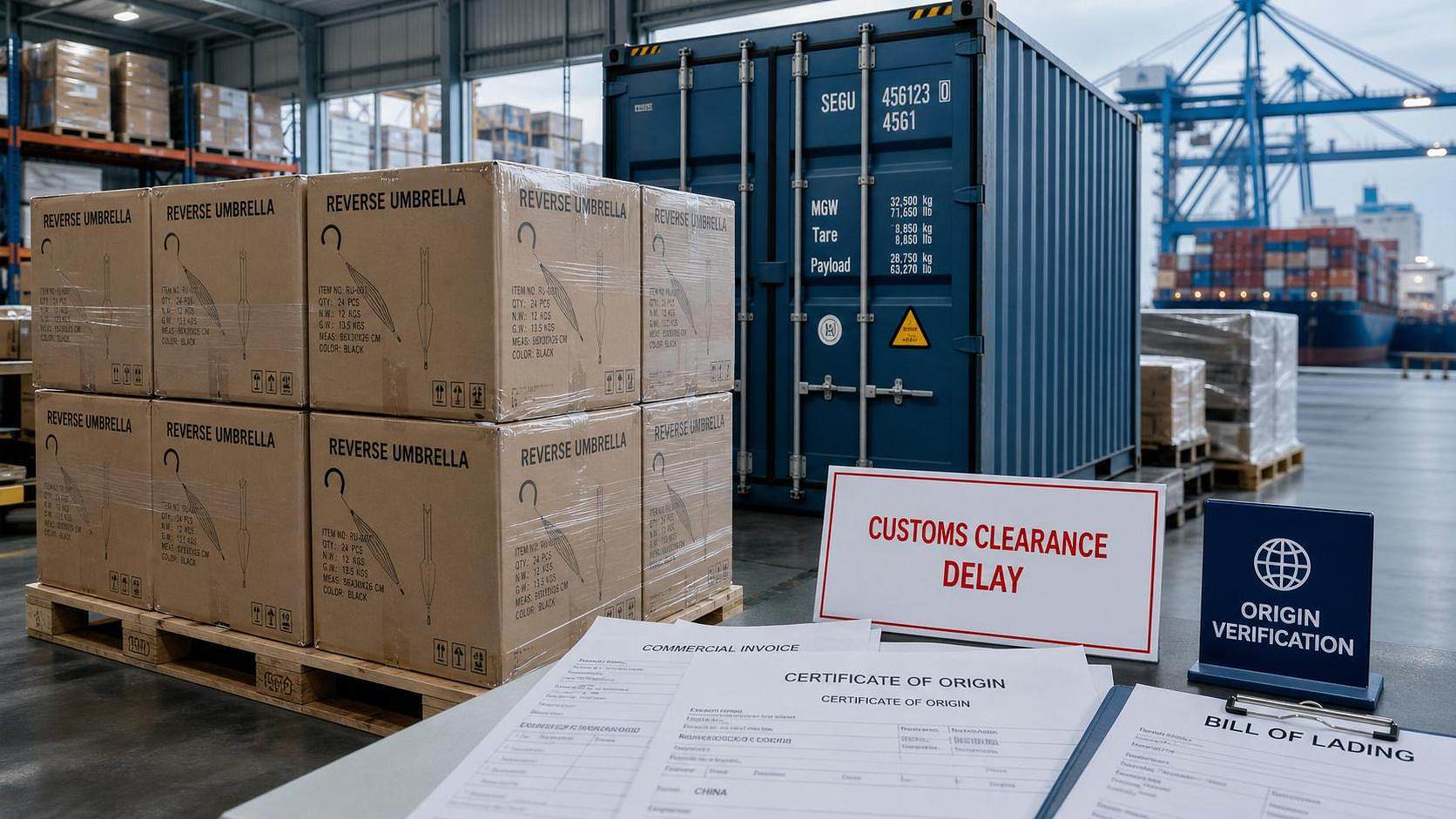
On June 30, 2026, U.S. Customs and Border Protection (CBP) expanded its circumvention review involving auto reverse umbrellas by adding 32 Chinese manufacturers that were not named in the first round of scrutiny. The review centers on whether simple assembly through Vietnam or Malaysia is being used to avoid anti-dumping duties. For exporters, North American importers, sourcing teams, and supply-chain service providers, this matters because it points to a more active enforcement posture that can affect customs timing, cash requirements, and delivery planning rather than remaining a narrow product-specific issue.
What CBP has formally changed
The confirmed development is that CBP updated its circumvention investigation list on June 30, 2026 and brought 32 additional Chinese manufacturers of auto reverse umbrellas into the scope of review. According to the event summary provided, the main issue under examination is whether simple assembly in Vietnam or Malaysia has been used to circumvent anti-dumping duties. The same summary indicates that the expanded review is expected to lengthen customs clearance cycles and raise deposit requirements, with direct effects on procurement rhythm and inventory planning for North American importers.
Where the operational pressure is likely to appear
Import purchasing teams may face slower buying cycles
From an industry perspective, importers and sourcing teams are among the first to feel the impact because the issue is tied directly to customs review and deposit exposure. The practical pressure point is not only supplier selection, but also purchase timing, shipment scheduling, and stock coverage. What deserves closer attention is whether current orders, replenishment plans, and supplier documentation are aligned with the higher review sensitivity around origin and assembly arrangements.
Export manufacturers may see higher documentation scrutiny
Chinese manufacturers involved in exports of auto reverse umbrellas may need to pay closer attention to how production, assembly, and transaction records are organized. Analysis shows that when a review focuses on possible circumvention through simple assembly, documentation related to manufacturing routes, production stages, and shipment arrangements becomes more commercially important. Even where no final enforcement outcome has been stated in the input, the compliance burden can still rise through additional questions, slower release timing, or more cautious customer behavior.
Logistics and customs service providers may need tighter file control
For customs brokers, freight forwarders, and other supply-chain service providers, the likely impact sits in document consistency, declaration support, and exception handling. Observably, when CBP widens a review list, service providers may need to coordinate more closely with shippers and buyers on supporting files, shipment sequencing, and contingency timing. The key issue is not a new service category, but a higher need for accuracy and traceability in existing trade processes.
North American inventory planning may become more conservative
The event summary already points to effects on procurement rhythm and inventory strategy. That means distributors and downstream channels may reassess reorder timing and buffer stock decisions if customs processing becomes less predictable. It is more appropriate to understand this as an operational planning issue first: delivery reliability, inventory exposure, and purchasing cadence may need adjustment even before any broader market reaction becomes clear.
What companies should watch now
Review origin and assembly records with greater discipline
Analysis shows that the central compliance question in this case is whether simple assembly through Vietnam or Malaysia is being used to avoid anti-dumping duties. Companies linked to the product category should therefore pay close attention to origin-related records, assembly descriptions, and the internal consistency of shipping and production files. The input does not provide detailed CBP documentation requirements, so this should be treated as a monitoring priority rather than a confirmed checklist.
Reassess lead times and deposit-related trade terms
Because the event summary states that clearance periods may become longer and deposit requirements may increase, businesses should closely review delivery commitments, purchase windows, and payment assumptions tied to U.S.-bound shipments. For importers and exporters alike, this may affect order confirmation timing, delivery promises, and inventory buffers. The point here is not that all shipments will face the same treatment, but that commercial planning now needs to account for a more demanding customs environment.
Track official wording and execution signals carefully
What deserves closer attention is how CBP and market participants describe the scope and handling of the review going forward. The input confirms the list expansion and the focus of the inquiry, but it does not provide a final determination or detailed execution criteria. Companies should therefore watch for further official language, trade handling signals, and any changes in how customers, brokers, or procurement teams interpret the review in practice.
Check supplier qualification against actual shipment risk
For buyers, supplier qualification may need to move beyond price and capacity to include exposure to customs review risk within this product segment. Observably, this is especially relevant where procurement decisions depend on stable delivery schedules into North America. The immediate issue is not a new certification regime stated in the input, but the need to align supplier selection with documentation readiness, shipment reliability, and the possibility of added customs friction.
Why this reads as an enforcement signal
Analysis shows that this development is best read as a concrete enforcement signal rather than a purely symbolic update. The reason is that the change is not framed as a general policy discussion; it is an expansion of a live review list tied to a specific product category and a defined circumvention concern. At the same time, it would be premature to treat the event as a fully settled market outcome, because the input does not provide a final ruling, detailed application standards, or confirmed long-term trade consequences. For the industry, the important distinction is that execution pressure appears to be real now, while the full commercial impact still requires observation.
How the market should interpret the development
At this stage, the more balanced reading is that the update creates an immediate compliance and planning issue for affected trade flows, especially where customs timing, deposits, and sourcing continuity matter. It should not be overstated into a definitive reshaping of the entire umbrella trade, but it also should not be dismissed as routine list maintenance. Current conditions make it more appropriate to understand this as a rule-in-execution development: the enforcement posture has become more visible, and companies connected to the product category need to plan for tighter review conditions while watching for further clarification.
Basis of this article and what still needs verification
This article is based on the user-provided news title, event date, and event summary. For developments of this type, the most relevant source categories typically include official notices, releases from regulatory authorities, customs or trade administration information, industry association updates, standard-setting documents, and reporting by established trade media. A specific official source link was not provided in the input, so the underlying official publication path still needs to be verified on an ongoing basis. Follow-up observation should focus on any detailed policy wording, execution criteria, customs handling practice, procurement document changes, and market feedback from companies affected by the review.